For the time being, delivery takes 3-10 business days due to reduced courier capacity over the holiday period.
BPA-free kids tableware
"BPA-free" does not automatically mean "plastic-free". If you want to take one worry off the list, many parents today pick materials like stainless steel, glass and ceramics.
Author:Anja, HocuNjam founderUpdated: May 23, 2026
What BPA is and how it gets into food
Bisphenol A (BPA) is a synthetic chemical that has been used since the 1960s in the production of polycarbonate plastics and epoxy resins.
Polycarbonate plastic is often associated with recycling code 7 ("Other") and the PC mark, but it is important to know that not all products with code 7 are automatically polycarbonate, nor do they necessarily contain BPA.
Epoxy resins that may contain BPA are often used as inner linings for metal cans and certain food packaging.
The problem arises when BPA migrates from the material into food or drink. Migration can be more pronounced:
at higher temperatures,
in contact with acidic food (tomato, citrus, fruit juices),
and in contact with fattier foods.
With kids tableware these situations often overlap, hot meals, fruit purees and fattier extras are part of the everyday diet of small children.
The American Academy of Pediatrics (AAP) recommends reducing exposure to plastic when heating food, and advises using alternatives such as glass and stainless steel where possible.
How BPA affects a child's body
BPA belongs to a group of substances known as endocrine disruptors, chemicals that can affect the hormonal system of the body.
Children are particularly sensitive because:
they are in a phase of intensive growth and development,
they take in more food and liquids relative to their body weight than adults,
and they have a greater overall exposure through their daily diet.
That does not mean parents need to panic, but it is a reason why many today try to reduce unnecessary exposure to plastic in contact with food.
"BPA-free" is not the whole story
The "BPA-free" label is a useful start, but it does not necessarily tell you everything about the composition of the material.
BPS and BPF substitutes
Some manufacturers replace BPA with related chemicals such as bisphenol S (BPS) and bisphenol F (BPF). Research over the last few years has raised questions about whether these substitutes may have similar hormonal effects. Laws and regulations have not yet ruled them out, due to a lack of scientific evidence of harm. BPA itself was in wide use until very recently.
So "BPA-free" does not automatically mean free of all questionable bisphenols.
Phthalates
Phthalates are plasticisers used to make certain types of plastic softer and more flexible.
Some phthalates today are classified in the European Union as endocrine disruptors and reproductive toxicants, which is why they are under increased regulatory scrutiny.
A product can be "BPA-free" and still contain other types of additives and plasticisers.
PVC (polyvinyl chloride)
PVC plastic carries recycling code 3.
Due to its composition and the additives often used alongside PVC, this material is generally not considered desirable for use, especially in contact with food, for both children and adults. It would also be wise to avoid PVC plastic in toys.
Practical tips for reducing exposure to plastic
Do not heat food in plastic.
Do not pour hot food directly into plastic.
Replace scratched, deformed or faded tableware with new pieces.
For hot food and everyday use, many parents pick more stable materials such as stainless steel, glass and ceramics.
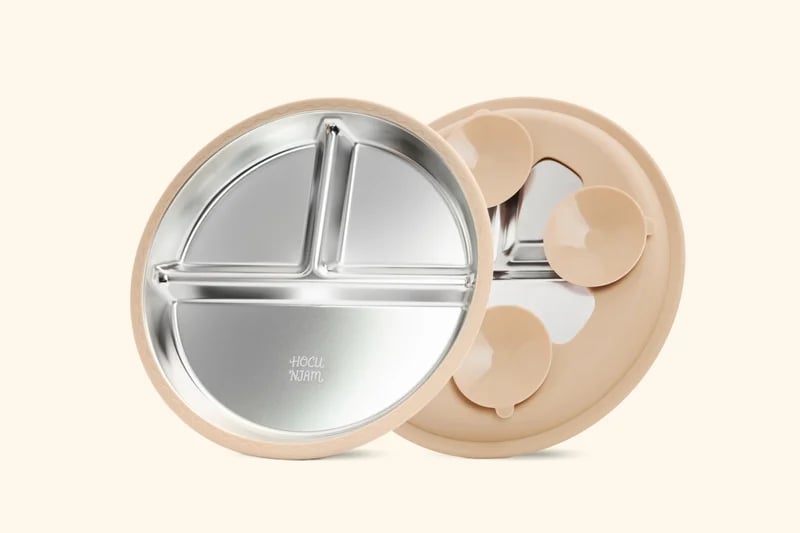
Our assortment is completely plastic-free
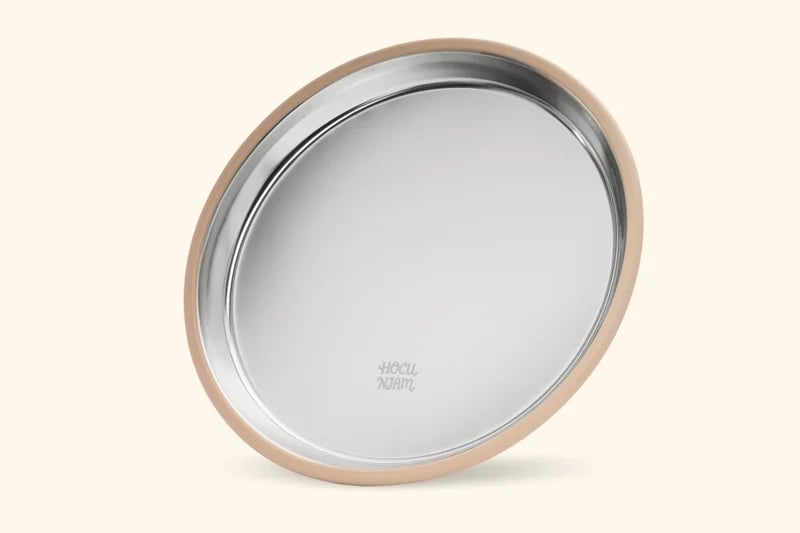
We make all our plates and bowls from grade 304 inox, lab-tested, free of BPA and phthalates.
Frequently asked questions about BPA-free kids tableware
What is BPA and where is it found?
BPA (bisphenol A) is an industrial chemical used in the production of polycarbonate plastics and epoxy resins. It is found in some plastic bottles, food containers, can linings and some children's toys. BPA can migrate from the container into food, particularly when heated or in contact with acidic food.
Why is BPA especially dangerous for children?
Children are more sensitive to BPA because their bodies are still developing, they have a lower body weight relative to the amount of food they eat, and their metabolism is not yet fully able to eliminate harmful substances. BPA mimics oestrogen in the body and can affect hormonal development, the nervous system and behaviour.
Is a BPA-free label a sufficient guarantee of safety?
A BPA-free label means the product does not contain bisphenol A, but it does not automatically guarantee the absence of all harmful substances. Some manufacturers replace BPA with BPS or BPF, which can have similar effects. That is why it is important to look for products that are also phthalate-free, PVC-free and that have results from independent lab tests.
Which materials are fully free of BPA?
Stainless steel (grades 304 and 316), glass and ceramics are materials that by their nature contain no BPA. Food-grade silicone is also BPA-free. Pure bamboo by itself contains no BPA, but bamboo tableware on the market almost always contains melamine or formaldehyde-based glue that binds the fibres; when heated, those binders can release formaldehyde into food, so we do not recommend it, even though the "BPA-free" label is technically true.
How do I tell if tableware contains BPA?
Look at the recycling code on the bottom of the product. Plastic with the number 7 (PC, polycarbonate) often contains BPA. Plastic numbers 1, 2, 4 and 5 are generally safer. Also look for a clear "BPA-free" label and CE certification. Quality manufacturers publish results of laboratory testing.
Does heating plastic release more BPA?
Yes, heating significantly speeds up BPA migration from plastic into food. Never heat food in plastic tableware in a microwave, even if it says microwave-safe. Also, do not pour hot food directly into plastic containers. Use glass, ceramics or stainless steel for hot food.
Can BPA accumulate in the body?
BPA is eliminated from the body relatively quickly (within 24-48 hours), but the problem is that exposure is constant, through food, drink and contact with various items. In children, even small doses can have an effect because they are consistently taken in through every meal. Reducing exposure by choosing safe tableware is a concrete preventive measure.
Are phthalates the same as BPA?
No. Phthalates are a different group of chemicals, but they are also harmful. Phthalates are used as plasticisers, they make plastic flexible and soft. They are linked to hormonal disorders and reproductive problems. Quality kids tableware should be both BPA-free and phthalate-free.
What is PVC and why should it be avoided?
PVC (polyvinyl chloride) is a type of plastic containing chlorine and often using phthalates as plasticisers. During production and decomposition it releases toxic substances. PVC is recognised by recycling code 3. For kids tableware, PVC is entirely unsuitable and should be avoided.
Which certifications are recognised for BPA-free products?
EN 14372 is the European standard for kids cutlery. Lab reports on the migration of harmful substances (FDA 21 CFR 177.2600, LFGB, REACH, RoHS) provide the most concrete proof of safety. Look for products with transparently published certificates and a clearly stated steel grade (304 or 316 food-grade).
Tableware free of BPA, phthalates and PVC
All our products are lab-tested and confirmed free of BPA, phthalates and PVC. Stainless steel grade 304 and food-grade silicone, materials that are inherently safe for your child, without glues or melamine.