
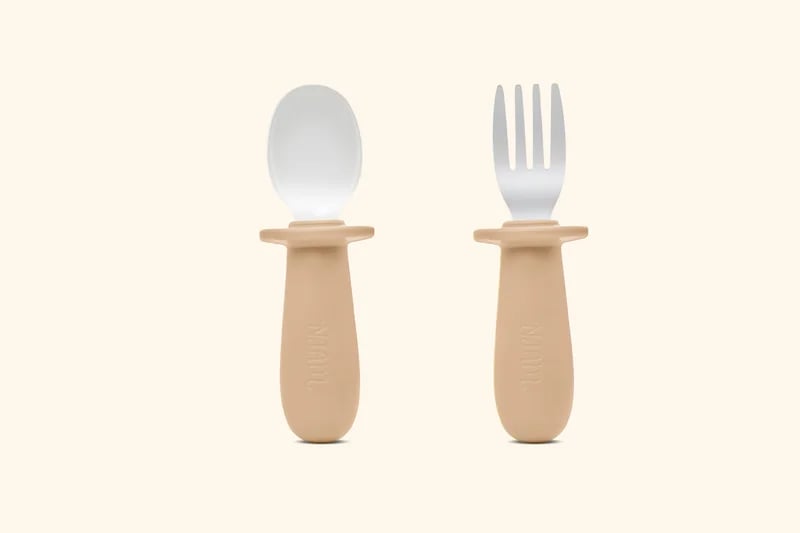
Small cutlery for kids
1.790 RSD

Cutlery from medical-grade stainless steel that follows the child through different stages of development, from first spoonfuls to independent eating.
With the start of solids, parents choose baby cutlery for the first time. Current pediatric guidance generally recommends introducing solid foods around the sixth month of life, but not before the fourth month, when the baby shows signs of developmental readiness.
In the beginning, the most important thing is that the cutlery is safe, light for small hands, with rounded edges, and narrow enough for the baby to easily accept it in the mouth.
For a baby's gums, cutlery doesn't have to be entirely soft. Metal cutlery can be perfectly fine for many babies, especially when it's light, smooth and sized for small mouths. Of course, every baby is different, so parents are the best judges of what suits their child most.
If a baby bites the cutlery hard, clamps down with the jaw or is particularly sensitive during teething, some families will find softer cutlery more comfortable for a period.
Soft baby cutlery is most often made of silicone or plastic. Those materials can be practical, but over time they can hold onto food smells, colors and detergent traces, especially after frequent washing and daily use.
That's why many parents today try to reduce the amount of plastic that comes into contact with food and choose more stable, longer-lasting materials such as stainless steel.
Our cutlery for babies and children is made from 316 medical-grade stainless steel, a very stable material for food contact that handles daily use well, whether the food is hot, acidic or greasy. It doesn't absorb odors, doesn't hold food colors, washes easily and handles the dishwasher and long-term use very well.
For a more detailed comparison of materials, see our .
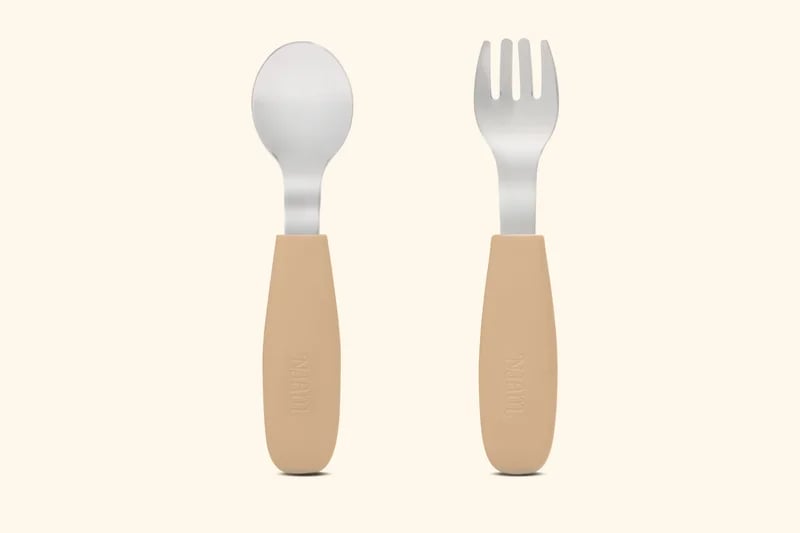
As the baby grows, the way they hold and use cutlery changes. In the beginning, babies use a palmar grasp, grabbing with the whole hand. That's why it's important the cutlery has a thicker ergonomic handle that gives small hands better control of movement.
As fine motor skills mature, the following develop: more precise use of the thumb, better hand-eye coordination and safer guiding of the cutlery to the mouth. Later comes the pincer grasp, when the child starts using thumb and index finger more precisely when picking up food and using cutlery.
That's why it's important the cutlery is light enough, easy to hold, adapted to small hands and safe for daily independent feeding.
Our small cutlery is intended for first meals and early independent eating, a smaller spoon head, a shallower shape, a shorter handle, a size adapted to babies.
The larger cutleryis intended for older children developing steadier movement who want to eat "like grown-ups."
All of our models are made of medical-grade 316 stainless steel, lab-tested for food contact, have rounded edges, are light for small hands and are completely dishwasher-safe.
Baby cutlery doesn't have to be disposable, plastic or short-lived to be practical and safe. We wanted cutlery that lasts for years, handles daily use well, follows the child's development and stays pleasant to use for both parents and children.
That's why we made a combination of stainless steel as the stable surface in contact with food, and an ergonomic shape adapted to different stages of motor development.
For a more detailed guide on tableware by age, see our complete guide to healthy tableware for children.
Small and large cutlery in every color. All our spoons and forks are made of medical-grade 316 stainless steel, lab-tested, free of BPA and phthalates. Light for small hands, dishwasher-safe.
Safe cutlery from medical-grade 316 stainless steel, lab-tested, free of BPA and phthalates. Shipping in Serbia in 2–5 days.